Showing posts with label Utiel-Requena. Show all posts
Showing posts with label Utiel-Requena. Show all posts
Saturday, October 20, 2012
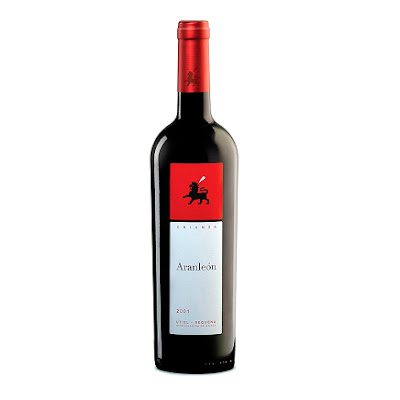
 Utiel-Requena wineries (II): Aranleon - Organic Wines
The winery ARANLEÓN was built in 1927 in the small village of Los Marcos,
100 km West from the Mediterranean Sea in the region of Valencia. The
elaboration of the wines is still being done in its majority in the old
tile fermentation vats which have now been recovered with epoxy resin.

We are using as well stainless steel vats of 4000 litres capacity and barrels of 400 litres for selected fermentations. In 2006 were finalised the enlargement construction works of the new winery to which we access through our particular “time tunnel” digged in an old vat.
There, in the new winery, we have located our barrels made with Hungarian and French oak as well as the bottling line, our warehouse and the social area.At this stage, our winery could be defined as a “gravity flow winery” where the flow of grapes/wines take place gently by gravity from 0 m at the entrance of the grapes to level minus 9 meters where the barrels and the bottling line are hosted and from which the wine is shipped.
In the new underground winery, the temperature and the humidity are constant throughout the year which helps preserve the wines.

ARANLEÓN owns 120 Has. of organic vineyards split in four different
Fincas: Montesanco in the Fontanars Valley, Casa de las Vides in Utiel,
El Churro y Los Rincones in La Portera. Our vineyards are grouped in planted at 750-770 meters of altitude on hilly slopes. Out
of the 120 Has, 90 Has are old bush vines of our 40 years old in a non
irrigated sandy and poor soil the local grape varieties of Bobal,
Monastrell, Tempranillo and Macabeo.

The remaining vineyards amounting 30 Has were planted in trellis in 1998 with drip irrigation on a light white clay and sandy soil, the international varieties; Syrah, Cabernet Sauvignon, Merlot, Marselan, Marsanne and Sauvignon Blanc.
Our viticulture is based on the constant work on each vine to achieve the right yields based on lose grapes, small and well aerated berries which increase the potential of the fruit. When approaching the vineyard we consider it as a whole and think of it as system which is alive and is in constant evolution following soil, climate and human factors.

The remaining vineyards amounting 30 Has were planted in trellis in 1998 with drip irrigation on a light white clay and sandy soil, the international varieties; Syrah, Cabernet Sauvignon, Merlot, Marselan, Marsanne and Sauvignon Blanc.
Our viticulture is based on the constant work on each vine to achieve the right yields based on lose grapes, small and well aerated berries which increase the potential of the fruit. When approaching the vineyard we consider it as a whole and think of it as system which is alive and is in constant evolution following soil, climate and human factors.

The sensitivity of ARANLEÓN is clearly
organic and from the beginning we have eliminated the use of herbicides
and pesticides and we have rationalised the irrigation. Starting from the vintage 2007 our vineyards have been certified organic.
The three Aranleon signature wines are from the D.O. Utiel-Requena.
Bodega Aranleon
Ctra. De Caudete s/n,
46310 Los Marcos (Valencia)
Tel: +34 96 3631640 ;
Email: vinos@aranleon.com
Web site: www.Aranleon.com
Ctra. De Caudete s/n,
46310 Los Marcos (Valencia)
Tel: +34 96 3631640 ;
Email: vinos@aranleon.com
Web site: www.Aranleon.com
Sunday, October 3, 2010
Harvest festival in Chozas Carrascal
On Saturday, the first of the month of October, in San Antonio de Requena, 70 km from Valencia, there was a nice event at the winery Chozas Carrascal. It was the 1st Harvest Festival winery made it with great success and brought together a group of friends around a glass of wine in the beautiful estate of the hosts, which provided a good picture to the event.
López-Peidró family turned to the present, covering, and large doses of affection in explaining their project and the successes that each day, are getting into the wine world as competitive and yet so interesting and exciting.

Arrival at the winery came with a warm welcome from both Maria José, mother and daughter, who accompanied us to the area where he was Xesco, agronomist for the cellar, and Julian Lopez, our host. There, under the shade of large pine trees with a wonderful view of the farm, was being warmly welcomed the attendees with a few glasses of cava that the winery produces, as well as a dose of culture through tasting different varieties of grapes. I have to make an observation, is that this fabulous cava limited production has gained much in the last acknowledged Peñín tasting, one of the best values occurring in Requena.

We continue our tour through the estate to return to the main building where guests were shown the fabulous facilities, I recommend my previous post about them to enjoy them like we did, later moving to an outdoor patio where we are still waiting some of the surprises of the morning. In this case we did a tasting of grape must. First and fermented grape must, now, a white Chardonnay grapes, wine, in the absence of stabilizing and filtering, will serve as the basis for this wonderful cava that had just taken for the welcome.

We also tasted a raw juice, unfermented still Syrah grape, sweet and yet very dense, which delighted the sweet tooth and that odd boy, as the case of my son, made him feel he had also thought about them, this nectar is one of the varieties within one of the 'coupages' of the winery, it becomes a scent and flavor that magnifies some of the winery's flagship wine.
And after visiting the pit, the exhibition area and shop, plus go through the always pleasant aromas of aging room, filled with barrels of the best coopers, and spent the fabulous Mediterranean garden where the surprise and warmth were to confirm what we expected, the ideal end to this event well done and perfect.

In fact it was enjoying a wonderful sunny day of autumn with a lot of wine lovers and friends, entertained by the pleasant sound of the band Comic delighted us with a relaxing tune and original songs also taste the finished other wines from the cellar, and commented on by Xesco around a table full of delicious dishes typical of Requena, invited to disconnect from the intense workables days past to focus all your senses at the moment.
The wine tasted Las Tres, a great white that grows with intensity over consumption, the eight red varieties with great aromas and sensations in Las Ocho, and the expected the Cabernet F 2008, a wine that has been punctuated by Peñín with 94 points in his final list, very different from the previous vintage, with great minerality, more Atlantic, more seductive nose, with a palette of aromas of undergrowth more pronounced than before and with a touch of tannin perhaps more notably, that the 2007 version.

And as the culmination of a sweet tasting special Garnacha and is limited to 800 liters in total, not cloying in the mouth and tries to convey more feelings fruit, despite being a wine called 'dessert'.

We ended up with a present from the cellar, which was the memory of the visit and the special day. We also had the opportunity to purchase products directly from each of the participants best enjoyed, taking in the memory in mind that these wines and cava and lived in company shares from the dream of this family will remain in our way much longer.
Sunday, August 1, 2010
Chozas Carrascal, wines at the forefront
Finally came the day I could arrange to visit Chozas Carrascal, after that the dates coincide, it was worth visiting this beautiful place and avant-garde as he has shown us our host, Julian Lopez.
Today we felt a sense of profound symbiosis between tradition, culture, modernity, excellent wines and a person in love with his work, which has given us a clock stop on our day to really feel good about ourselves .
The winery is nestled in a sea of vineyards in San Antonio, a district of Requena, in a valley where the AVE train circulate close to joining Valencia with Madrid, but falls short of the 40 ha. vineyard surrounding the house, type 'château' which forms the property has a spectacular location and allows the distance between the vineyards and wineries are flown between 5 or 10 minutes, to be important in the process of harvesting for the grapes do not suffer any break before entering the warehouse.
The visit began by exploring the surrounding area of the house, Alex has been with us a summiller of Barcelona who was visiting and was as surprised as us, while we waited in the cool porch, I watched the beautiful garden Mediterranean and garden variety of strains that are on the outside, which are a sampling of innovative varieties planted in this area producing wines from the cellar. The pool looked inviting us to swim, but we began the visit and have not felt the heat of the morning.
Upon entering the house we found the right taste and decor into the hall and the large living room with a table of spectacular dimensions as well as its thickness and is made of the same trunk in one piece. From there we have come to visit the rest of the cave, going through what we then delight as tasting room.
The rest of the winery is built with concrete blocks designed, painted its walls, giving it a really welcoming and does not denote the sobriety that we can transmit this material. We visited the store of products made and aged in bottle, then go to the fermentation room and elaborations.
In this room I was struck by the presence of concrete tanks that inside there was no kind of cover, where fermenting varieties separately, apart from the stainless steel vats and, according to Julian told us micro-oxygenation occurs through the pores of the concrete, and chilled plate by controlling the fermentation temperature. Very curious to see in this store so modern. We have seen the outside of this room with the press and the thresher, which they use instead of the stemmer so that the grain of the grape does not suffer any damage before reaching the reservoirs.
We have also seen the two lines of bottled wine and cava, and later move to the aging room of cava, watching the bottles and resting horizontal flip machines and some cages with bottles. From there we moved to the wine aging room, with about 200 barrels of 225 liters., all French oak, through which pass the winery sells wines matured or aged in wood. We also visited some ancient deposits that the house had once and serve as a aging room of the winery produces wines to study its evolution.
The visit has brought us to the tasting room and wine exhibition where Julian has surprised us a wonderful beginning to taste the cava, Chardonnay and Macabeo, discreet aroma with tropical fruit on the nose, the mouth we felt rich and volume, a cava-to-eat meats including elaborate.
White wine Las Tres were as follows, made with Chardonnay, Sauvignon Blanc and Macabeo and two varieties fermented in barrel, in principle, has served quite cold, I guess about 6 °, approximately, which is felt as a syrup peach, oily and rich, while subtle and fresh on the palate and has changed then in the cup, after having changed the temperature as we exchanged views on it. The change has stepped up its aromas and flavors with more structure in the mouth and turning to remember more aromatic citrus and white flowers with a light vanilla aftertaste.
The Cabernet Franc is the red varietal in the cellar, which has evoked more feelings. A wine very mineral, powerful fruit with a bang on the nose and very soothing, a different wine from a variety almost unknown in these zone, giving them a real treat for the senses and is highly recommended to look good with your guests an elegant wine that does not displease the most discerning palates.
Finally we tasted a sweet wine Moscatel de Grano Menudo, which is made in France, where the family also has a winery, and also is a cheerful and pleasant elixir reminiscent of freshly peeled citrus fruits such as tangerines.
The winery produces other wines com Las dos Ces, white and red wines with good value for money, rosé Las Cuatro with very special characteristics and the red Las Ocho, a complex wine to develop and difficult to define the ' blend 'of eight varieties but encouraged to drink by their rounded and smooth tannin.
Finally a nice Saturday morning in summer where we have enjoyed and learned that in Utiel-Requena wines are good, which can be both innovative and traditional work and effort that becomes a reward for the senses and that we We felt at home because of the attention and closeness that Julian has given us during his company's warehouse.
Sunday, July 4, 2010
Heiner Sauer, German wines and also Utiel Requena
Heiner Sauer, German winemaker, created a winery in 1987 the Pfalz, the German Palatinate in the Rhine valley, an area near the border with France. The German tradition of cultivation of white grapes and one of the best areas for growing Riesling and Gewurtztraminer varieties and varieties incorporating 'Burgunder' make this winery produces wines from its 17 ha. following the German tradition of more than 1000 years old.

Harvesting is done by hand with various types of selection, always seeking the highest quality grapes. The winemaking is achieved with modern techniques to extract the maximum exponent in aromas and flavors, but with the traditional view of time and quiet to give the wine to develop gradually.
In Utiel-Requena, Heiner Sauer bought some land in order to produce red wines with Mediterranean character, because in Germany it was very difficult to get acclimatized varieties, its climate and soil types. Bodegas Palmera In particular, the name of the winery on Spanish soil, has 14 ha, south-facing south-west, in the municipality of Utiel, where we can find a fabulous and old strains of almost 50 years Tempranillo, Bobal, Cabernet Sauvignon and Merlot, planted recently.

Here are vinified red wines with character, taking advantage of soil and climatic differences between day and night, at a height close to 700 mts. and less than 100 km from the Mediterranean. Klaus Lauerbach, the winemaker is responsible for controlling the vineyard and the production of these wines, combining these varieties for wine as special as L'Angelet D'or, a Red Guard wine with 20 months in French oak barrels and a grape rigorous selection on process and only when exceptional vintages occur.

L'Angelet, Capricho and Viña Cabriel are the three wines, with special selection, which develops in Spain Bodegas Palmera, remained at 90% of production dedicated for export. For varieties produced in Germany, the white, I have to emphasize his great Rieslling and above all a 'Burgunder' made from Pinot Grey, whose structure in the mouth makes it different from the typical targets of the area.
Monday, June 28, 2010
Visit winery Pago de Tharsys
In my tour of the wineries in the region Utiel-Requena, I must stress that this small winery, located on the outskirts of Requena near the N-III, I had never gone unnoticed in most specialty stores and shops delicacies of the city of Valencia, there was always a major gap in the shelves of its flagship product, Cava Brut Nature Pago de Tharsys, being peculiar to the product label is a twisted ceramic tile with an image of a woman with a big eye and a tousled hair painted in cobalt blue and subjected to the neck of the bottle with a satin ribbon black.

However, it is not fair to qualify for this winery that image, apart from the spectacular wine cellar that has in it in the mouth and was named best sparkling wine from Spain in 2005, but by the variety of products that the winery produces winemaking, product know-how of the family led by Vicente Garcia and Ana Suria, dedicated to this task of making wines and cavas from the mid-twentieth century.
The winery is located in the form of pago, surrounded by vineyards and winemaking complex is formed by the house of the nineteenth century, which has commercial installations, the bottler, the barrel room, a basement, building on the house had trulli , with desks and raising cava bottles and abroad stainless steel tanks less than 10,000 liters. There is also a much larger ship, which is where older deposits, hopper, pneumatic press and other equipment for winemaking. There is another ship that came to visit I guess it will be the warehouse of the winery produces cava and so if you visit are the stills that are used to produce distilled from pomace wine-making and sparkling wine. The complex dispose a Rural Hotel, next to a lake with bird life and can be enjoyed with a visit to the winery for a weekend.
The name Pago de Tharsys, according to the guide that accompanied us from the word "pago" in the world of wine is associated with the winery is surrounded by its own vineyards which supply grapes for wine making (for French château) and Tharsys, referring to the first civilization in the Iberian peninsula, the Tartessos, believed the current farm Requena by traces found in excavations.
As a curious comment that in the 12 acres adjacent Godello and Albariño grown varieties Atlantic difficult to grow in this area, but that his care and attention results in a wine, with their vintage night in early September with a fresh good acidity in the presence of tropical fruit aromas and a very balanced in the mouth. Cabernet Franc are also grown, variety used in the 'coupages' from other varieties such as Bobal (which is made a sparkling white, Pago de Tharsys Unico), Merlot, Chardonnay, Macabeo, among others and as a foreign variety is Bronx, with which it is a sweet and aromatic wine grapes to gain soloing sugars for fermentation.

It is certainly that was a very instructive visit, where we find a variety of products in small quantities, but of excellent quality and above all innovation in design and originality.
Sunday, May 30, 2010
Covilor, the cooperative of grape Bobal
Following my tour of the Utiel-Requena region this time played visiting a cooperative, in this case we move to the village of Las Cuevas, about 7 km. Utiel, where we hoped Beatriz Requena, our host, who accompanied us and showed how to live the wine in this area.
La Cooperativa Virgen de Loreto, Covilor, dates from 1955 and has about 500 members, the cooperative was a pioneer in the area include stainless steel tanks and modern winemaking equipment, as we know it today, during the 60s. The building is of face brick and amenities include concrete tanks and still retain and use the 'trulli' or underground reservoirs to produce wine.
Adjacent to the winery and in a wide area, are the farms and plots, the different partners that belong to the cooperative, cultivated grape varieties that give the wine, dominate over the range 70% Bobal, queen and mistress of these parts, and which provides the highest level of splendor once the harvest begins in late August and September.
The area where fields are located chalky-clay land and are situated in a vast plain within the Utiel flat, bordering Camporrobles, Sinarcas and Utiel, and tucked into the northeast by the Sierra del Negrete and southwest on Bicuerca saw. The land lies inside a large bag of groundwater, which has been used to dig wells and take water for use in the vineyard in the hot summers of the site.
We were visiting a vineyard foot plots near the cellar with Cabernet Sauvignon, Macabeo, Tempranillo and Bobal lot. These varieties are planted in glass, the oldest that some are over 60 years and the most modern trellis in time, the grape harvest is done by hand or machine depending on the parcel and if the owner has it or not.
La Cooperativa Virgen de Loreto, Covilor, dates from 1955 and has about 500 members, the cooperative was a pioneer in the area include stainless steel tanks and modern winemaking equipment, as we know it today, during the 60s. The building is of face brick and amenities include concrete tanks and still retain and use the 'trulli' or underground reservoirs to produce wine.
Adjacent to the winery and in a wide area, are the farms and plots, the different partners that belong to the cooperative, cultivated grape varieties that give the wine, dominate over the range 70% Bobal, queen and mistress of these parts, and which provides the highest level of splendor once the harvest begins in late August and September.
The area where fields are located chalky-clay land and are situated in a vast plain within the Utiel flat, bordering Camporrobles, Sinarcas and Utiel, and tucked into the northeast by the Sierra del Negrete and southwest on Bicuerca saw. The land lies inside a large bag of groundwater, which has been used to dig wells and take water for use in the vineyard in the hot summers of the site.
We were visiting a vineyard foot plots near the cellar with Cabernet Sauvignon, Macabeo, Tempranillo and Bobal lot. These varieties are planted in glass, the oldest that some are over 60 years and the most modern trellis in time, the grape harvest is done by hand or machine depending on the parcel and if the owner has it or not.
In the field engineers work and advise the owners to prepare the stocks and the health status of the grape harvest and distribution of it is controlled. Each collection is sent to the Cooperative, the hub of the area, which is downloaded classified for fermentation in the vats and 'trulli'.
In Covilor produce about 3 million liters of wine, all are intended mostly in bulk so that the amount of bottled or 'bag in box' that the winery produces is for members and for sale in the area. We had the opportunity to taste two wines (although we have some more to enjoy at home and with friends), a 100% Macabeo white and a 'blend' of Bobal, Tempranillo and Cabernet Sauvignon with 12 months in the barrel.
The Alto Cuevas 2009 blanco, made with a 100% Macabeo is a greenish-yellow wine, bright, fresh and fruity, with a touch of natural carbonic fermentation itself, very easy to drink and appropriate for this summer we entered. The red, Alto Cuevas Crianza 2007, is a cherry red wine, well structured, with aromas of vanilla and ripe black fruit, sweet tannin, very pleasant to the palate, aged in French oak and American freshmen, and an extraordinary value for money.
The rest of the range wines Alto Cuevas also accompany all tastes, so we have a rosé Bobal is spectacular, very fruity and reminiscent of ripe strawberries all with a touch of acidity balanced and highly recommended to accompany rice and pasta . The young red Tempranillo is light enough, yet tannic, a daily wine aromas remind us of wild fruit.
At high expression wines I recommend 100% Bobal Sucession range, marketing the hold a reserve aged for two years in French oak barrels, a powerful wine of broad tannins, great structure and color, especially red to accompany stews prepared meals A treat for the taste of the variety Bobal has evolved dramatically in the development of this cooperative and enjoy the occasion as noteworthy.
The visit ended with lunch in the restaurant Genaro, in the town of Fuenterrobles near Las Cuevas de Utiel with a special gourmet menu, well presented and delicious, highly recommended if you go to visit the wineries of the region of Utiel- Requena.
Monday, May 17, 2010
Vegalfaro Winery, wine strain
The visit last Saturday, which I mentioned in the previous post was in Requena, had a second winery to go, just opposite the location of the former, and in the village of El Derramador, it is Vegalfaro Winery, a winery more modern, established in early 1980 and coming from a family that devoted their efforts to the farming world.
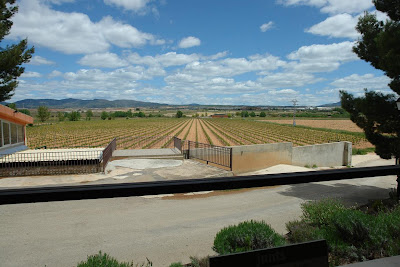

This family decided to convert their crops and winemakers from the crowd of studying the 'terroir' and seeking ways of producing high quality wines. This will seek the best parcels of their property and planted the best species, looking for the 'clonning' which best suit the environment and conditions of each of their lands. The concept of 'Vino de Pago' and 'Vino de Finca' was coined in the development of these by their owners.

Vegalfaro aims to develop the wine directly in the field, studying, controlling and improving all aspects of the physiology of the plant, so that gives the best grapes on the vine sensory capacity, it helps the process is solely to produce what the earth provides and prevents subsequent corrections fermented mash.

Vegalfaro aims to develop the wine directly in the field, studying, controlling and improving all aspects of the physiology of the plant, so that gives the best grapes on the vine sensory capacity, it helps the process is solely to produce what the earth provides and prevents subsequent corrections fermented mash.

On our visit we attended Andrés Valiente, owner of the winery said we want quality wines and knowledge position at the top by merit. From the care of the plant to its harvest, the process is thorough, so that in passing into the hopper, we can say that wine is almost made. The cellar is well adapted to this philosophy, to reap the grain at its optimal time and produce a wine with controlled maceration and fermentation, to go to the cellar stored before bottling or for young wines and cava.

All in a perfect state of cleanliness and well-differentiated each process and place of the winery to produce wines and cava that today are achieving higher scores quota competitions and tastings where they occur.

The wines we could not taste in the warehouse, but kindly gave us a couple of bottles, Vegalfaro Crianza 2006 (Tempranillo, Merlot and Syrah) and Pasamonte Blanco 2008 (Chardonnay and 15% white Grenache), the latter belonging to the DO Valencia by the location of the property. Other wines as Pago de los Balagueses Merlot and Vegalfaro Cosecha 2009 had already tried it at home accompanied by friends and we were excellent, with a personality that reminded us of wines of high expression of northwest Spain.

Finally a very informative visit, though with little time, but more quietly and hope to repeat that this time with us Rodolfo, winemaker and son of the owner to go deeper into this philosophy of doing things and starting looking for Callide field .
Sunday, May 16, 2010
Visiting Torre Oria cellar
In the town of Requena, right in the village of El Derramador find a beautiful building and is noted for its domed tower and a surrounding balcony and minaret for the control of the surroundings.
The building dates from the late XIX century and was commissioned by a family from northern Spain, which did business in the booming silk industry in Requena in previous centuries and until the end of XIX century. The winery-palace of the Oria family was sold in the 50s of the twentieth century to five families from Requena who founded a cooperative that ultimately Torre Oria named in honor of their fold propietary. Today belongs to the group Natra, related group the cocoa industry.
In today's visit we entered the house that is kept in the same state as it was when they bought these families, we visited the rooms and then we come to watch the old winery, which today are the old desks for the cava and the trulli or wineries where the wine was fermented and stored.
The walk through the subways, which are the same but reported trulli, are used to relax the cellars, which Requena at the end of the 80 officially began to develop within the CR Cava, although in previous years were already being successfully . The most emblematic cellars winery rest for 4 years and are prepared manually desks, cava Centenario (100) Torre Oria is prepared in this way.
The building dates from the late XIX century and was commissioned by a family from northern Spain, which did business in the booming silk industry in Requena in previous centuries and until the end of XIX century. The winery-palace of the Oria family was sold in the 50s of the twentieth century to five families from Requena who founded a cooperative that ultimately Torre Oria named in honor of their fold propietary. Today belongs to the group Natra, related group the cocoa industry.
In today's visit we entered the house that is kept in the same state as it was when they bought these families, we visited the rooms and then we come to watch the old winery, which today are the old desks for the cava and the trulli or wineries where the wine was fermented and stored.
The walk through the subways, which are the same but reported trulli, are used to relax the cellars, which Requena at the end of the 80 officially began to develop within the CR Cava, although in previous years were already being successfully . The most emblematic cellars winery rest for 4 years and are prepared manually desks, cava Centenario (100) Torre Oria is prepared in this way.
The rest of cava production relies on the modern ship port that communicates with the old, and where we have seen up to 3.5 million bottles of cava in its different varieties, as well as machines that mechanically replace the old desks and turning the bottles ranging in metal cages with many bottles at once.
As for the wines, produce enough quantity and trademarks and aging room containing some 3500 Bordeaux barrels of 225 liters, which can produce more than 1 million bottles of red aged wine, in addition to the young, rosé and white are produced more wine than cava.
As for the wines, produce enough quantity and trademarks and aging room containing some 3500 Bordeaux barrels of 225 liters, which can produce more than 1 million bottles of red aged wine, in addition to the young, rosé and white are produced more wine than cava.
The rest of the store communicates with the houses used by the employees at the time that today are used to tasting room and shop. Today we tasted the cava Centenario, a Brut Nature Cava, with 44 months in bottle, golden yellow, dry and with fine bubbles, very fruity and soft on the palate.
We tested also the young white Macabeo and rosé Bobal, the first with aromas of banana and pineapple, yellow color and very fresh and fruity. The rosé bobal was delicious, pink and violet aromas with strawberries and raspberries, it is very aromatic and fresh. These wines are marketed under the brand Marqués de Requena.
The red Nu, part of the DO Valencia and is a varietal Syrah, very meaty, dark and roasted aromas of old leather, with a raising of nine months. The winery produces for more Utiel-Requena wines Crianza, Reserva and Gran Reserva with brands Marques de Requena and Torre Oria, we could not prove for lack of time, but we really liked the attention of Irene and their explanations , which have helped us know this winery as emblematic of the area.
We tested also the young white Macabeo and rosé Bobal, the first with aromas of banana and pineapple, yellow color and very fresh and fruity. The rosé bobal was delicious, pink and violet aromas with strawberries and raspberries, it is very aromatic and fresh. These wines are marketed under the brand Marqués de Requena.
The red Nu, part of the DO Valencia and is a varietal Syrah, very meaty, dark and roasted aromas of old leather, with a raising of nine months. The winery produces for more Utiel-Requena wines Crianza, Reserva and Gran Reserva with brands Marques de Requena and Torre Oria, we could not prove for lack of time, but we really liked the attention of Irene and their explanations , which have helped us know this winery as emblematic of the area.
Subscribe to:
Posts (Atom)
