Thursday, April 22, 2010
 Organic wines: Bodegas Porsellanes
In the municipality of Benissa (Alicante) are sales offices and warehouses of the SAT Juan Porsellanes, makers of wine and oil completely organic agriculture. The 300 ha. the company owns in the heart of the mountains of Alicante, in particular Travadell Valley, near towns and cities of Muro de Alcoy , Gorga, Benillup. etc, here in this valley that is surrounded by a Mediterranean flora, pine trees, olive trees and undergrowth are the farms where it is grown, organically, the vines and olive trees on this farm.

The vines are planted with a substrate of organic fertilizer and animal and plant varieties like grenache, tempranillo, the syrah, the great merlot, cabernet sauvignon and as the white varioedades, the Malvasia, Muscat, chardonnay .... The company also produces a liqueur wine muscat that farm this variety in the municipality of Teulada, particularly in vineyards that are located within 500 meters from Moraira beach, in the Mediterranean.
Practiced organic farming includes various quality controls to not add any kind of chemical in the crop or in the process of winemaking and oils, these products being recognized at European level with the seals that ensure the highest levels of control . The winery is hosting the DO of Alicante.

Regarding the red wines bottled noted that three brands that are commercially Mas de Carita, Entrepins and Agulló, a white wine and wine La Merina and a liqueur muscat La Sort, winner of last exhibition BioFach in Germany as the best organic wine Muscat.
Red wines produced have a distinctly Mediterranean, with the common note in all seamless integration of the varieties with the Alicante mountains.
Thus we find Mas de Caraita 2007, a half aged wine, with three months in American oak, with a 'blend' of grenache, syrah and tempranillo, has a cherry red color with shades of brown in their trim, tears dense and greedy, the nose alcohol noticeable aromas integrated with typical Mediterranean maquis (thyme, rosemary, etc.) and reminiscent of poppies, the acidity in the mouth just in the first attack, pleasant on the palate with hints of freshly torn roots, wet limestone and fruity aftertaste the forest.
Thus we find Mas de Caraita 2007, a half aged wine, with three months in American oak, with a 'blend' of grenache, syrah and tempranillo, has a cherry red color with shades of brown in their trim, tears dense and greedy, the nose alcohol noticeable aromas integrated with typical Mediterranean maquis (thyme, rosemary, etc.) and reminiscent of poppies, the acidity in the mouth just in the first attack, pleasant on the palate with hints of freshly torn roots, wet limestone and fruity aftertaste the forest.

Entrepins 2007 with 12 months in American oak barrels, we found a spectacular 'blend' of Merlot (82%) and the rest Cabernet Sauvignon, has a cherry red color with violet tones in their trim, alcoholic nose is reminiscent of fresh baked dough , cedar wood and caramel aromas, tannins on the palate, hints of Mediterranean pine resin, very easy to drink, toasted aromas, earthy nutty moist forest.
Agulló 2007, a 'blend' of Tempranillo (80%) and Cabernet Sauvignon, with a cherry red with orange tones on the rim, has a more floral nose, reminding the mountain flowers mixed with orange blossoms in the mouth is strong wine of serious demeanor with a sense astringent and somewhat bitter, reminiscent of last drink mosses, roots, liquorice and notes some vegetables.

For dessert we made a liquor wine Moscatel La Sort, Roman Muscat grapes overripe on the ground, which paints a very bright golden color with aromas of honey, dried fruits (apricots, prunes, dates, ...) In the mouth, just sweetness, not being cloying, with hints of orange, pine resin and unnoticed just alcohol in your finish.
We find that these wines, whose distribution is still mainly in European markets, integrated perfectly the traditional Mediterranean and into the mountains of Alicante and its coastline, in turn are perfect for food pairing in the area, such as rice, the blue fish, grilled vegetables and meat dishes with red and white.
Wednesday, April 21, 2010
Bobal grape variety
Its taxonomic classification corresponds to the family of vitaceae, Vitis genus, specie V. vinifera and variety Bobal. It is the most widespread of Spanish red varieties, both in area planted, as in wine produced, can be considered that there are between 90,000 and 100,000 hectares of this variety. Its origin is in the area of Requena, although there is in Spain

Important synonymy is worth mentioning the following: Tinto de Requena, Requeni, Requena, Bobos, Provechón, etc.
Description can be seen a stain vase, which has an effect on medium-high, and carrying semi-erect, with some creeping vines and long, strong, branched, dark brown and mean diameter.
The mature leaf is large, five-lobed, dark green, dull, with smooth surface, back scratches, and petiole short, stout and glabrous.
The typical grap cluster Bobal, is medium-large, compact, shouldered, with visible stems, irregular and arising from the second bud.

It is a rough strain that has a medium-high fertility, if the cropland has not been previously vineyard and lower-middle after it has been vineyard. In the region of Utiel-Requena, usually emerge in mid-April, ripening in mid August. Harvest usually takes place during the months of September and October.

It is sensitive to excoriose, Phomopsis viticola; Stereum hirsutum, and Phellinus igniarius The diseases caused by bacteria, such as Xantonomas amperina and Agrobacterium tumefaciens, have little importance in this variety. There are certain problems of viruses, such as virus' short internode "of "Curl" and "marbling."
With regard to pests, is quite resistant to insects in general, mainly because the skin of its grains is quite hard, because the climatic conditions of the growing area not conducive to the spread of these pests. Of all However, the most important is the moth Lobesia botrana cluster, although damage in cultivation are usually low. Its resistance to phylloxera, Philloxera vastatrix slab, is upper middle.
As a variety of late sprouting usually has enough resistance to Frost however, a variety susceptible to late spring cold.
Sunday, April 18, 2010
Tasted Wines in the 22nd Mostra in Valencia in two days
Although it is very difficult to remember all the wines I have tasted in the XXII Mostra held in Valencia these days, I'll list the ones I've tasted, with links to their site, I promise to comment in more detail each of them.
To thank those wineries that welcomed me with open arms and those who have given me some samples to make tasting notes at home with greater ease, because I assure you that the fifth wine and surrounded by so many people is impossible to concentrate on describe the flavors and sensations that wine conveys.
At some wineries I left a dossier that inlclude an interview published in the portal www.mundovino.net ,Beatriz is the driving wine blogger of this website. Also comment that the dossier of Desmonts International Market Development is an opportunity to make known the wine to more than 70 million consumers and worth trying.
Once again thank all the organizers and exhibitors the work you do and that I should go on to spread the culture of wine and traditional food with pleasure these days we have tasted.
List of wines tested in the XXII Mostra de Valencia.
Red Wines
Entrepins 2007 (Bodegas Porsellanes)
Agulló 2007 (Bodegas Porsellanes)
Caraita (Bodegas Porsellanes)
Equinoccio (Ladrón de Lunas)
Los Pin0s% (Bodega Los Pinos)
 Los Pinos Crianza 2004 (Bodega Los Pinos)
Cabernet f (Chozas Carrascal)
Las dos ces (Chozas Carrascal)
Finca Collado 2005 (Bodegas Finca Collado)
Vega Infante 2009 (Bodegas Utielanas)
Rafael Cambra 2 (Bodegas Rafael Cambra)
Sucesion Bobal Rva. 2004 (Bodegas Covilor)
Casa Don Angel Malbec 5-6 (Vera de Estenas)
Mas de Bazan Bobal (Agro de Bazan S.A.)
Horma del Hoyo 2007 (Bodegas Cerro Gallina S.L.)
Cueva Selección de Finca 2006 (Bodegas Cueva)
Cueva Selección de Finca 2007 (Bodegas Cueva)
White Wines
Les Merines (Bodegas Porsellanes)
Blanco Turbio (Bodegas Cueva)
Liqueurs
La Sort (Bodegas Porsellanes)
And this has been what I have in two days of each other, but would not admit it taste more on my mouth , so I reserve the right to try other wines at any time and location and go directly to the wineries producer has to make a nice report and discuss with the developers themselves the qualities of wine tasting.
Saturday, April 17, 2010
22nd Exhibition of wines, champagnes, liqueurs and traditional foods
Last Wednesday was inaugurated XXII Mostra de Vins, Caves, Licors i XX d'Aliments Tradicionals de la Comunitat Valenciana (Exhibition of wines, champagnes, liqueurs and traditional foods), and I tried the best of our land and had the opportunity to meet many people and to see old acquaintances. Until I was in the position of Bodegas Porsellanes (DO Alicante) as a commentator on its wines.
Well I leave the pictures in the morning, the late-night did not do any and devoted myself to taste the wines that interested me most, which will give account in the next post.
Well I leave the pictures in the morning, the late-night did not do any and devoted myself to taste the wines that interested me most, which will give account in the next post.
Saturday, April 10, 2010
Heretat de Cesilia cellar
To the south of Valencia in the province of Alicante, lies the town of Novelda, famous for its marble industry and spices and seasonings of the mark Carmencita. There we found the winery Heretat de Cesilia, a modern winery, but charming built around the home of the Marques de La Romana to the early eighteenth century.
Access to the cellar is easy from the A-31 road towards Alicante or Madrid, always looking for the train station and an access road to the farm. Dispose farm 30 hectares of vineyards to produce wine, with varidades as Monastrell, Cabernet Sauvignon, Merlot, Syrah, Petit Verdot, Chardonnay, Macabeo and Albariño among others. The rest of the farm produces table grapes, such as in Spain we usually consume each December 31 to the sound of 12 bells.
Access to the cellar is easy from the A-31 road towards Alicante or Madrid, always looking for the train station and an access road to the farm. Dispose farm 30 hectares of vineyards to produce wine, with varidades as Monastrell, Cabernet Sauvignon, Merlot, Syrah, Petit Verdot, Chardonnay, Macabeo and Albariño among others. The rest of the farm produces table grapes, such as in Spain we usually consume each December 31 to the sound of 12 bells.
Upon arrival found a large door, surrounded by Frand chains that lead us to a modern style building, where the reception, tasting room and store its products. Once gathered in a meeting that begins a visit to the site. In this case we have been with Nuria and Patricia have taken us around the winery, making a brief and concise explanation of the important details and routine of running it.
We visited the house in 1707 the Marques de La Romana of the time, with the tools and the restoration of the same (say that the present owners, of Galician origin, live there), going to see a small garden with two precious jewels, a tractor of the early twentieth century and a sea anchor of a ship of the era brought there from the north of Spain.
We visited the house in 1707 the Marques de La Romana of the time, with the tools and the restoration of the same (say that the present owners, of Galician origin, live there), going to see a small garden with two precious jewels, a tractor of the early twentieth century and a sea anchor of a ship of the era brought there from the north of Spain.
The wine starts, after harvesting, with a manual selection of the best grape beans. The type of agriculture practiced is of organic origin, without pesticides thus attempting to create a parallel to the vineyard habitat for insects and using biological traps to prevent them from damaging the fruit or plant.
The selection of the fruit goes through a soft crushed to stainless steel tanks inside a building, these are so conical, with cold maceration prior. During the fermentation process and the passage between the upper deposits (15,000 lts. Each) is possible 'stirring and battonage' manuals and pumping to get extract the maximum flavor and color to red wine. The white and rosé (more rosé elected in 2008) are pressed to get the juice with their original colors of the variety itself, discarding the skin of the same.
A fermented is stored in these tanks and the best selection of grapes are aged in French oak barrels, American and Eastern Europe, each variety separately, and then make the 'blend' and is bottled for further bottle aging .
The visit ended with a tasting of 2 wines discussed by the 'summiller' of the house along with a tasting of dried beef and pork Galician awakened our senses. The first wine was Azal 2008, Macabeo, Chardonnay Albariño, with a bright yellow, oily and rich, with primary aromas to futas as pear or apricot, with the right acidity, a dry wine easy to drink and postnasal memories of pineapple and peaches in syrup.
Lizana, 2005, is a very rich red wine, a young but well preserved, without losing a bit of fruitiness, varieties such as Merlot (majority), Monastrell, Petit Verdot and Syrah, cherry color with ruby trim, evokes in nose currants, red plums, licorice and Mediterranean undergrowth, easy to drink in the mouth with a bitter mouth sensation typical of the predominant grape (Merlot) and evolution of licorice and leather, as well as ripe cherries.
At the end we have been delighted with the visit that we have completed with a visit to the castle and monastery of Santa Magdalena de Novelda, ending with a meal at a local restaurant and enjoy a day strawberries but sunny and pleasant.
Thursday, April 8, 2010
Wine tasting in the D.O. Utiel-Requena for bloggers
Firstly thank catavino.es, the regulatory council DO Utiel-Requena and participating wineries, that together made the day 1st Meeting for Wine Bloggers a fun, entertaining and above all rewarding.
There were 17 wineries in the D.O. Utiel-Requena who showed us their flagship products, the variety Bobal as the star of the event, but also had fabulous varietal itself fostered discussion and chat among attendees and winemakers.
I would say that all the wines tasted are backed by the professionalism of everyone involved in it, the end of the day people are those with their chores and tasks, put your senses from the field to the cup, excellent treatment by all those who were at the event.
Highlight, without detracting from anyone, wines that I was fascinated by my character, texture and always trying to give my personal impression, that like all things, may or may not like. That is why I want to emphasize the two single-varietal Bobal that my particular taste were the best of the evening.
The first is "Olivastro" of Bodega y Viñedos Carres, a young winery run by Jose Luis Torres Carpio, I think many will agree to sell and I knew I was captivated by its powerful color and texture with vivid violet, very satiny, with aromas of ripe red fruit just biased by a fragrant wood, tannin still persistent, with an invitation to drink for a toast and persistent aftertaste of ripe fruit. A very good choice of this varietal.
After tasting wines are very interesting as "Bobal" of Dominio de la Vega, very fruity, fresh, with purple tones are very interesting, good presentation, but perhaps too fruity in the mouth and over-roasted and licorice, goes on sale the month next (May) and I hope to be successful, the rosé "Viña Enterizo" and "Marqués de Caro" I was surprised by its fruitiness and freshness, the variety Bobal note that this wine was given a clean color and very evocative aromas of strawberries and raspberries, and rosé bobal hit hard in this segment, sparkling bobal Pago de Tharsys I was in the ink, but I promise to try and discuss their impressions. A young red varietal bobal was the Bodegas Utielanas "Vega Infante" very powerful and meaty, ideal to accompany a meal of sausages in the area. But the second bobal which was excellent, too, was "Bobalia" Vereda Real, a wine after aging for 3 to 5 months in oak from different sources implying a much more brick red color, more mineral, balsamic and high polish in the mouth, perhaps more traditional and yet different from what was tested in the evening.
The different varieties of Bobal were also in good shape, I am also with two, although there is a third that I liked a lot. It surprised me a varietal Merlot Vera de Estenas "Martinez Bermell" fermented in new oak, ruby color with a clean, very jovial and serious at once, with a memory of red fruits, vanilla and toast, very surprising to the palate well put together with wood and perhaps lacked the presence of Felix Martinez, we have further explained the secrets of this wine. The more complex wine to my taste was "Las Ocho" of Chozas Carrascal, one that combines 8 different varietal grapes with a 'coupage' very difficult to achieve, but you have a tremendous complexity, balaj ruby color, bright and clean first glance, the nose it shades fruit, some cinnamon and vanilla and toasty aftertaste reminiscent of far away, especially chocolate and a touch mineral is not very marked. "Excelencia Edición Limitada" of Emilio Clemente, wine author, was the last wine I could test and it seemed a good choice, ruby red hue, with powerful aromas of ripe fruit, balanced, invited to drink in the mouth is noted sweet tannins lead to a tour postgustal a toasted and roasted aromas with light chocolate.
In the end a perfect evening, where I met other bloggers of Alicante, Madrid, Barcelona and Valencia, I was very well received by people of the Regulatory Council Utiel-Requena and of course thanks to the work of the winemakers and winery representatives who delighted us with their best products and hope to appointments as interesting as this.
In the end a perfect evening, where I met other bloggers of Alicante, Madrid, Barcelona and Valencia, I was very well received by people of the Regulatory Council Utiel-Requena and of course thanks to the work of the winemakers and winery representatives who delighted us with their best products and hope to appointments as interesting as this.
Saturday, April 3, 2010
Vega Palancia Cellar (Castellón)
 For a long time in one of my post I posted a note on the wines of the province of Castellón, unknown wines that have traditionally turned to producing after the abandonment occurred in the 50-60 years of last century.
 Today we visited a winery in the heart of the Sierra de Espadán, about 40 km from the city of Valencia, located in the province of Castellón inland.
This winery is family court, producing about 6,000 bottles of red wine between table wine and nurturing Wines belonging to the area Vinos de la Tierra, in this case IG Castellón. The heart of the Sierra del Espadán, is rich in springs of very pure water and with little minerality, vegetation is Mediterranean, from mountain emphasis on plants as rosemary, thyme and others, and the trees dotting the landscape are pines, olive and a cork.

This winery has a 6 ha. vineyard with varieties such as Tempranillo, Cabernet Sauvignon, Syrah and Merlot, plants young people, nestled in the quiet little Almaroz Valley, nestled between the foothills of the Sierra de Espadán and Palancia River in the municipality of Soneja. The south-southeast, about his situation 400-500 m. above sea level and about 12 km of coastline, and the composition of the soil makes this place ideal for growing vines.

The winery is located in the town of Azuébar, less than 10 km from the growing area. Harvesting is done manually and transported in boxes of 15 kg and chilled so it will not cause any micro fermentation, there is deposited oak barrels from 2000 to 3000 liters of capacity, where maceration at controlled temperature fermentation and then produce the wine. With gentle pumping over the wine remains in the barrels to be decanted into barrels French oak, where lie at least 12 months, then returned to oak casks and then bottled rounded to the bottle for 6 to 12 months.


The result is Black Label Palancia Vega, red wine varietal that after this long aging becomes a show all senses, underlines its deep red color, glyceric, with aromas of ripe fruit, hints of cinnamon and vanilla roasted background. The palate has good acidity, long drink, powerful, fleshy, with rounded tannins and mature.

The wine is tasted the 2006 vintage and now goes to the market and the family and special character of this winery and its owner, José Manuel Molina, expect great vintages and fine wines in the future. The ingrained way of doing the wines, following the family tradition, looking for a high level of quality and excellence, make it unique enjoy this wine at any time and understand the complexity and the naturalness of a mature development patient in our palate.
Friday, April 2, 2010
Wines of the week (March 27th -April 1st)
Although I refer to last weekend as the beginning of my personal taste, to say that I've tasted three wines are completely different and more and more wineries, without being great, make great wines and palatable, especially affordable to the pockets of today.

Saturday began the week with a wine cellar is unknown to me as Simon de Montfort, it seems that is a second mark of the hold of Fontanars dels Alforins (Valencia) Daniel Belda. A winemaker in the Valencian Community which is developing very good wines and projection, as well as various related activities viniviticultura.
In particular we tested the Simon Monfort Cabernet Sauvignon, aged from 2004 . A wine to open it denoted a good drink alcohol, 11 months in oak (French and American, maybe some Eastern European), a deep red color, very bright, just glycerin, from free-run juice and aromas, which after being open half an hour, appreciated the wood, very mixed between red fruits like strawberries and currants. In the mouth could be seen high acidity, like a young wine to drink long aftertaste Mediterranean aromas of scrub (rosemary, thyme ,...) and some toast.

Already during the week and with the little time left to enjoy a glass of wine, we tested a young wine Grenache based, particularly in the highlands Zaragoza, Calatayud. In their homelands semidesert born 2008 Garnacha de Fuego, a wine produced by Bodegas Ateca, Orowines group. This wine glass upon entering the fruit conjures up some amazing scents, the shake becomes more mature as the aroma of red fruits. The color is impressive with a layer of gloss that highlights the merits cherry ripe. The palate is very soothing, very cool and easy to drink, with a fruity aftertaste and mineral grains, which evokes the terrain where it originated.

The third wine, which now I have in my cup, a wine from Valencia, from Bodegas Enguera, Angelical 2006, a wine that is a 'blend' of three very distinct varieties such as Tempranillo, Syrah and Monastrell with a 12-month parenting Central European oak barrels, a deep cherry red, very expressive nose, floral notes evokes mixed with chocolate in your mouth sweet and easy drinking with ripe tannins, with an aftertaste suggestive and expressive where it is easy remember blueberry, chocolate, oak, some spice and black pepper ...
Anyway highly recommended wines for less than 6 euros is not to be missed to evoke that in this country are rich varieties, land very different and very promising wines.

Saturday began the week with a wine cellar is unknown to me as Simon de Montfort, it seems that is a second mark of the hold of Fontanars dels Alforins (Valencia) Daniel Belda. A winemaker in the Valencian Community which is developing very good wines and projection, as well as various related activities viniviticultura.
In particular we tested the Simon Monfort Cabernet Sauvignon, aged from 2004 . A wine to open it denoted a good drink alcohol, 11 months in oak (French and American, maybe some Eastern European), a deep red color, very bright, just glycerin, from free-run juice and aromas, which after being open half an hour, appreciated the wood, very mixed between red fruits like strawberries and currants. In the mouth could be seen high acidity, like a young wine to drink long aftertaste Mediterranean aromas of scrub (rosemary, thyme ,...) and some toast.

Already during the week and with the little time left to enjoy a glass of wine, we tested a young wine Grenache based, particularly in the highlands Zaragoza, Calatayud. In their homelands semidesert born 2008 Garnacha de Fuego, a wine produced by Bodegas Ateca, Orowines group. This wine glass upon entering the fruit conjures up some amazing scents, the shake becomes more mature as the aroma of red fruits. The color is impressive with a layer of gloss that highlights the merits cherry ripe. The palate is very soothing, very cool and easy to drink, with a fruity aftertaste and mineral grains, which evokes the terrain where it originated.
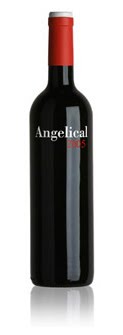
The third wine, which now I have in my cup, a wine from Valencia, from Bodegas Enguera, Angelical 2006, a wine that is a 'blend' of three very distinct varieties such as Tempranillo, Syrah and Monastrell with a 12-month parenting Central European oak barrels, a deep cherry red, very expressive nose, floral notes evokes mixed with chocolate in your mouth sweet and easy drinking with ripe tannins, with an aftertaste suggestive and expressive where it is easy remember blueberry, chocolate, oak, some spice and black pepper ...
Anyway highly recommended wines for less than 6 euros is not to be missed to evoke that in this country are rich varieties, land very different and very promising wines.
Subscribe to:
Posts (Atom)
